
On the Edge of Eternity A Meditation from Cedar Bend Road
On the Edge of Eternity
A Meditation from Cedar Bend Road
Darryl Miller Fuhrman
November 8, 2025
I was driving down Cedar Bend Road this evening—5.3 miles of familiar blacktop—to check on Mother, the way I do every single day, either by phone or, like tonight, by pulling up in person. The sun had already slipped behind the pines, leaving the sky the color of a bruised peach, and the headlights of Old Blue caught the first fireflies blinking on like tiny lanterns.
The world to come has been on my mind for months now—quietly, persistently, the way the river keeps its own counsel beneath the cypress knees and the herons. Every ordinary act—turning the wheel, easing past the mailbox, watching the dusk gather in the pecan branches—feels suddenly treasurable, as if I’m being taught to hold things lightly so I can let them go.

It reminds me of that whisper from Ecclesiastes: “He has set eternity in the human heart.” (Ecclesiastes 3:11). Maybe that’s what this quiet ache is—not fear, not melancholy, but the pulse of something eternal calling from just beyond the treeline. Heaven is not far; it’s near enough to hum beneath the crickets.
From the small hilltop in Mother’s backyard, I—Darryl Miller Fuhrman—stand on Fuhrman land, hard-won and held, looking down toward the river across the Sewell place. That ground was the Lester farm once, worked and squandered by my great-grandmother’s brothers, Bob and Dye—shiftless, no-account wanderers who let the red clay slip through their fingers like so much chaff. After they both passed, the Sewell’s great-grandfather bought it up, and his people have been working that land for well over a hundred years now, turning it steady under the sun.
Yesterday evening the cotton-picking machines and tractors were still at it, mechanical arms and roaring engines stripping the last bolls before frost; tonight, from this same rise, the sunset paints the whole valley in molten gold and bruised rose, the river a dark ribbon at the far edge, and the Sewell fields glowing like a promise kept.
Stand on the Sewell farm and look east—up the gentle rise, past the wire fence and the leaning pines—and there she sits: Mother’s white house, its gleaming tin roof catching the last light like a beacon on a hill. That roof has flashed silver across the valley since I was a boy, a landmark for every hand who ever picked cotton down below—and now for every operator who guides the iron beasts that do the work.
The rise I stand on will one day pass to Darryl and David’s children, and to my own Miller—fourth generation to steward what the Fuhrmans clawed from canal mud and Alabama grit. David, nine years my senior, has been the quiet pillar of our family since Dad passed in 2006, the way Southern families are truly designed: the eldest son steps forward when the father steps into glory.
Time folds here, but not without its reckonings: the Lester place became the Sewell place, while ours endures as a quiet rebuke to what gets lost when hands go idle. Yet even as the land changes names and owners, I feel the deeper truth: “The earth is the Lord’s, and everything in it.” (Psalm 24:1). We are not owners—only stewards for a season, caretakers on borrowed ground.
I used to think eternity was a far country you reached only after the last breath. Lately it feels closer—like the shimmer you see on hot asphalt just before the mirage resolves into solid road. Every sunset over the Coosa could be the last one I watch from this hill, and that is not morbid; it is clarifying. The edge of eternity is not a cliff but a threshold, and I am learning to stand on it without flinching.
The River and the Tree
From my mother’s backyard, the view spills downward across a gentle slope toward the Fuhrman property’s open pasture, which seamlessly folds into the sprawling Sewell family farm. In the far distance, especially at dusk, massive harvesters lumber through the sea of white cotton bolls like mechanical giants, their lights flickering as they gather the harvest under a fading sky. Yet beyond those endless cotton fields, the landscape opens further to reveal the Coosa River—a silvery ribbon that curves gracefully around Cedar Bend Road, cradled in the rolling foothills of the Appalachians, now ablaze with autumn’s vibrant splendor of crimson, gold, and amber leaves.
And when I look at that river, I cannot help but think of another one—John’s river in the Revelation: “Then the angel showed me the river of the water of life, clear as crystal, flowing from the throne of God and of the Lamb. Down the middle of the great street of the city, on each side of the river stood the tree of life… and the leaves of the tree are for the healing of the nations.” (Revelation 22:1–2).
That same river runs, unseen, beneath this soil—its current eternal, its source divine. The Coosa may feed farms and fields, but the heavenly river nourishes souls. Both are reminders that the world, though scarred, still thirsts for restoration.
C.S. Lewis once wrote that heaven is “the place where all the beauty we have known here comes home.” When I stand in this fading light, I can almost believe that. The cotton fields and the river, the silver roof and the bending trees—they are all previews, small reflections of that greater reality where the Tree of Life stands at the center. Its roots run deeper than time, and its fruit ripens for all who have ever longed for home.
The Sacred Inheritance
From the Sewell side, looking back toward Mother’s hill, the land rolls upward as if reaching for heaven itself. Weathered fences lean, harvesters groan, and yet something eternal lingers—the sense that these fields are not just geography but theology: ground redeemed through faithfulness.
The old theologians used to say that Eden was never destroyed, only veiled. That the Tree of Life was not lost but transplanted to the heart of the New Jerusalem, guarded now by grace instead of sword. Perhaps that’s what I’m glimpsing on evenings like this—small unveilings of paradise along Cedar Bend Road.
When the sun settles behind the ridge and the last light fades from the tin roof, the air feels heavy with remembrance. I can almost hear my father’s voice, steady and sure, quoting from Revelation: “To the one who overcomes, I will grant to eat of the tree of life, which is in the paradise of God.” (Revelation 2:7).
Maybe that’s the promise that steadies me now—that our roots, though buried in Alabama clay, are grafted into something far older, far stronger, far more enduring.
The Edge of Light
I don’t know how many more drives I’ll make down Cedar Bend Road, watching the light fade across the river and rise again on that roof. But I know this: eternity isn’t waiting at the end of the road; it’s running beneath it, like the quiet pulse of the river itself.
Heaven is not a distant realm, but the restoration of all that was once good—the full bloom of the same life that began with a garden and a tree. That’s what I hold onto when the air cools and the night deepens: that one day, when I step across that unseen threshold, I’ll find these same fields transfigured—cotton turned to clouds, the Coosa gleaming like crystal, and the Tree of Life rooted right at the bend, its leaves whispering home.
Until then, I’ll keep walking this ground and giving thanks for every evening that still finds me here—on the edge of eternity, where heaven leans close and the old trees sing of things everlasting.
“The sky bruised peach and gold, eternity humming beneath the crickets—standing on the edge where heaven leans close.”
“The sky bruised peach and gold, eternity humming beneath the crickets—standing on the edge where heaven leans close.”

“The Coosa curves like the river of life, its current unseen but eternal, flowing from the throne through Alabama clay and foothills ablaze.”

“Weathered iron beasts rest in the pasture, guardians of borrowed ground—stewards for a season on Fuhrman land hard-won from grit and grace.”
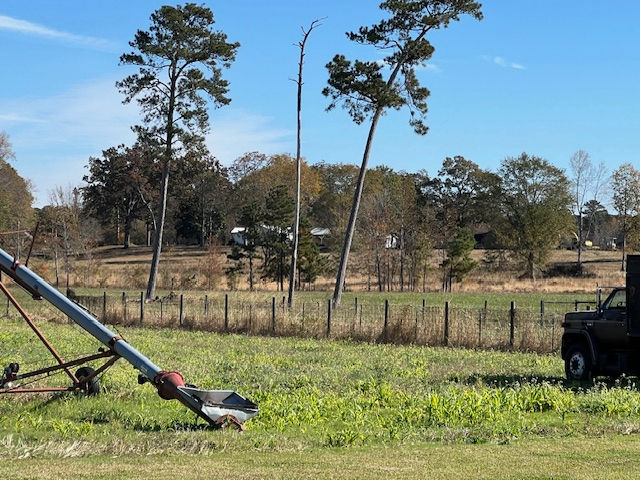
“Abandoned tools lean against the sky, pines standing sentinel—reminders that the earth is the Lord’s, and we are caretakers on the threshold.”

“Looking back toward Mother’s white house, tin roof catching the last beacon of light—a landmark across the valley since boyhood, flashing silver like a promise kept.”

“Rolling pasture meets the Sewell fields under clear autumn blue, fences leaning, trees whispering of roots grafted into something far older and enduring.”


Comments